COURSE DESIGN CASE STUDY
Sociology of Deviance
Online asynchronous course · Canvas
Design challenge: How can an asynchronous course use student-generated content and scaffolded inquiry to promote engagement, authentic assessment, and independent disciplinary reasoning?
Course Walkthrough
A Scaffolded Inquiry Architecture
Each weekly module follows a consistent learning sequence, providing a predictable structure while helping students build their skills in sociological observation, analysis, and interpretation.
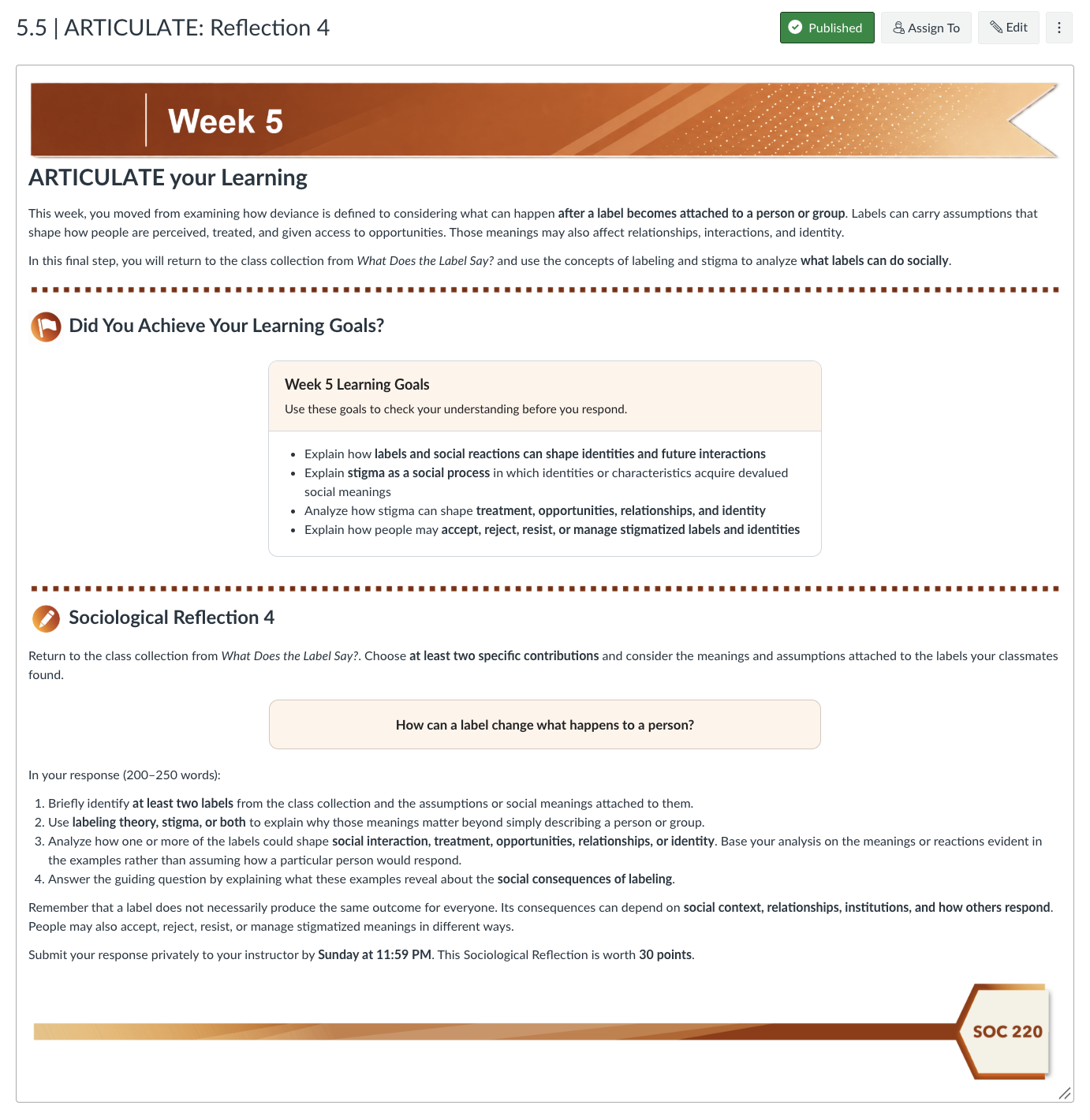
Students contribute real-world examples to a shared class collection, then use these materials in individual reflections to apply theories, compare explanations, and examine patterns of labeling, power, and social control.
Design Principles
Prepare
Orient
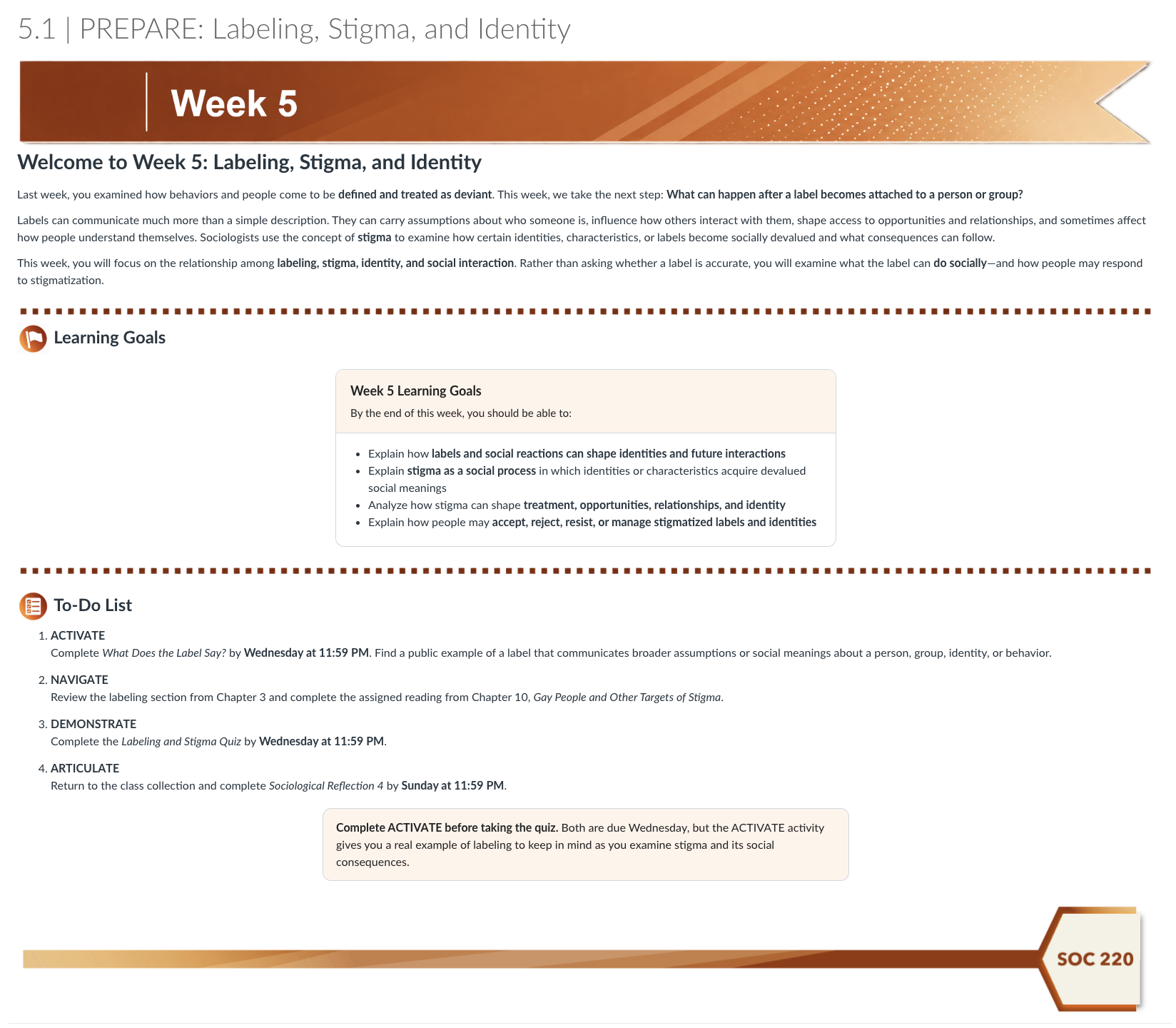
Activate
Notice
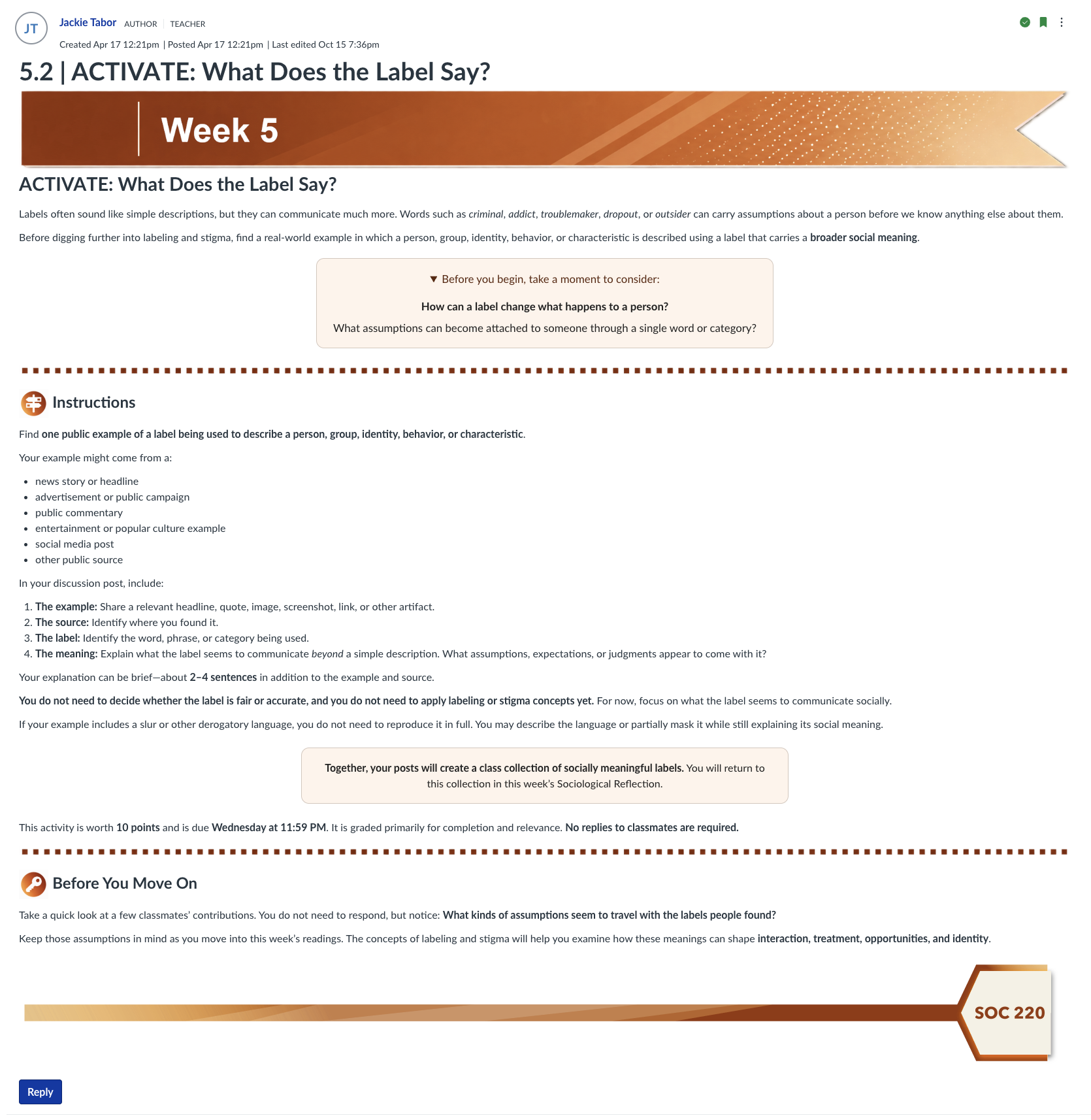
Demonstrate
Apply
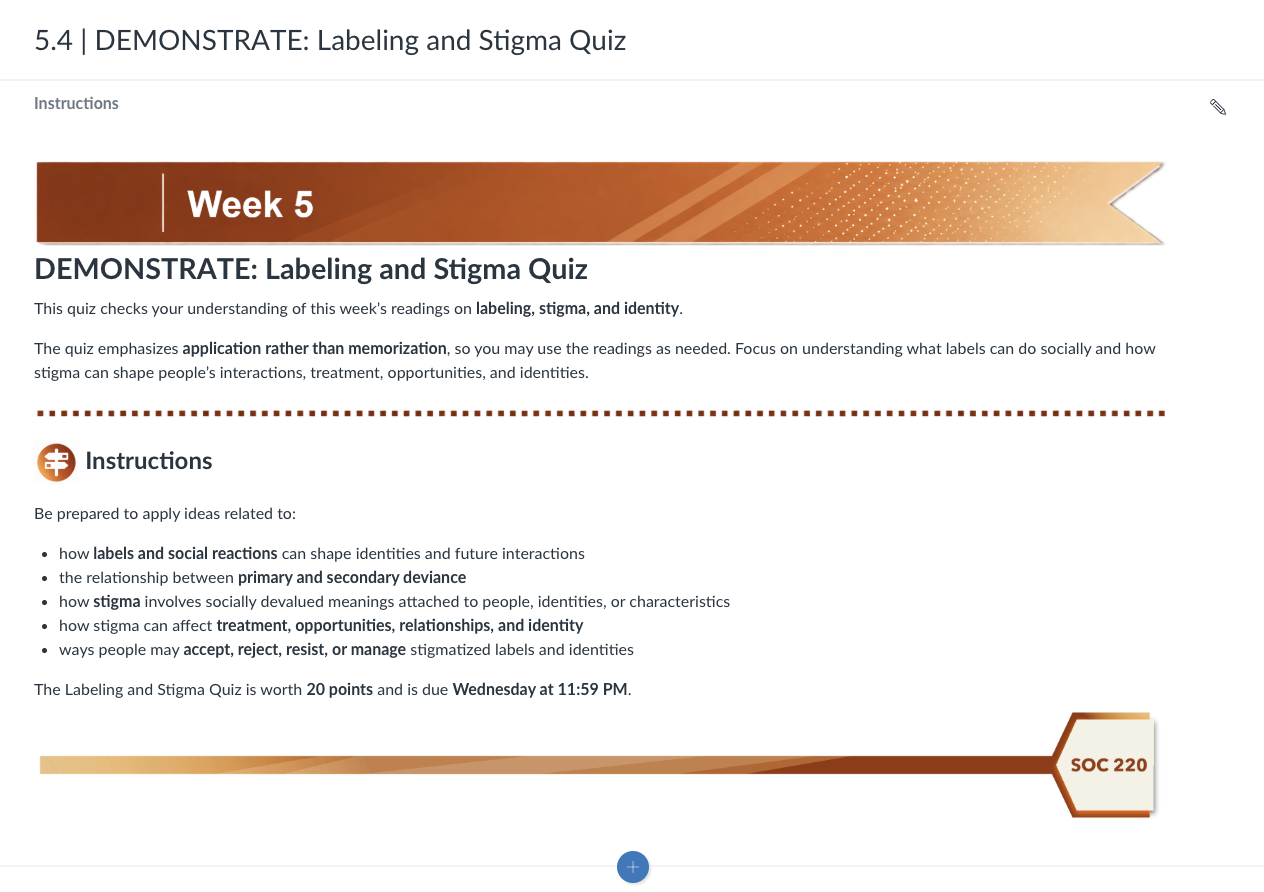
Articulate
Reflect
SIGNATURE ASEESSMENT
Social Control Audit
In the culminating assignment, students investigate an everyday setting, collect original observations or artifacts, and analyze how norms are communicated and enforced. They present their findings in a public-facing format of their choice.
Authenticity: Students investigate evidence drawn from everyday life rather than relying only on preset case studies.
Scaffolding: Observation and documentation precede theoretical analysis and independent inquiry.
Shared learning: Contributions build a collective body of material that the class can interpret from different perspectives.
Independent reasoning: Individual reflections require students to evaluate specific evidence and defend their interpretations.
Navigate
Explore